Understanding Dutch Elm Disease in Alberta
Dutch elm disease (DED) is a serious fungal infection that has devastated elm populations across North America, and Edmonton is no exception. Despite its name, the disease did not originate in the Netherlands but was first identified there in the 1920s. The pathogen spreads through two primary vectors: the elm bark beetle and root grafts between neighbouring elm trees. When an infected elm beetle feeds on a healthy tree's bark, it can transmit the fungus directly into the vascular system, causing the tree to wilt and eventually die.
In Alberta, DED has become a significant concern for municipalities and homeowners alike. The disease causes a rapid decline in tree health, often killing a mature elm within one to three years of infection. Symptoms include yellowing and wilting of leaves that start in the upper canopy and progressively move downward. Once a tree shows advanced signs of DED, recovery is extremely difficult, and the tree typically must be removed to prevent the disease from spreading to adjacent elms through root contact.
The Alberta Elm Pruning Ban: What You Need to Know
To combat the spread of Dutch elm disease, Alberta has implemented a provincial pruning ban on elm trees during specific months. The ban prohibits pruning elm trees from April 1 through July 31 each year. This timing corresponds with the flight season of the elm bark beetle, which is most active during warmer months. When elm trees are pruned during this period, the fresh wounds attract beetles, and the exposed wood provides an ideal entry point for the fungal spores they carry.
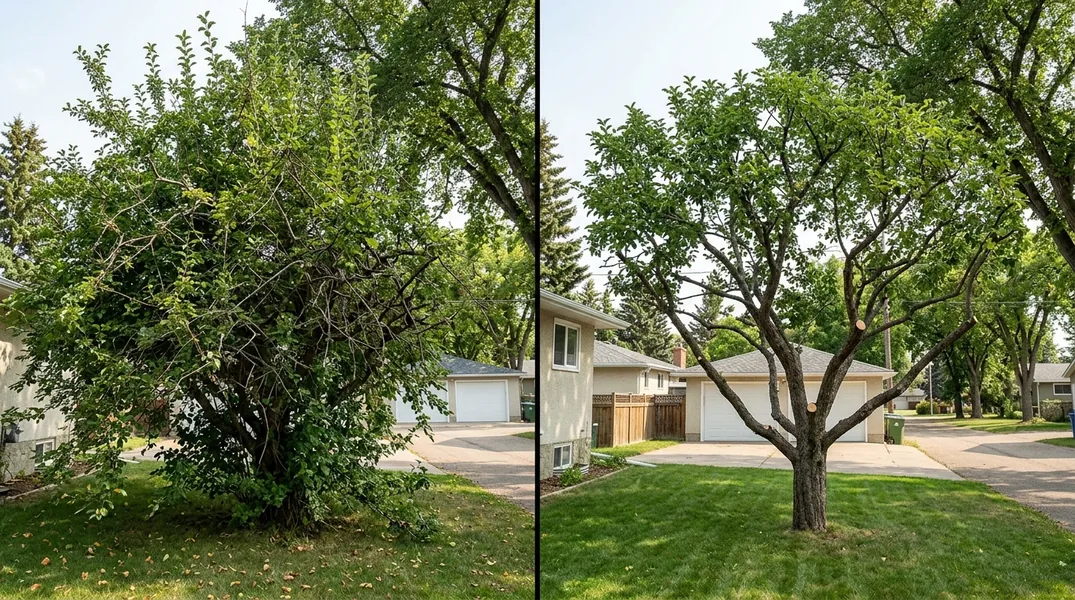
The logic behind this restriction is straightforward: fewer pruning wounds mean fewer opportunities for beetles to infect trees. Homeowners in Edmonton who violate this ban risk fines and, more importantly, contribute to the spread of a disease that threatens the entire urban forest. If your elm tree requires Tree Pruning and Crown Reduction, timing is critical. The safe window for elm pruning in Alberta runs from August 1 through March 31, allowing arborists to manage tree health without inviting beetle activity. Many homeowners are unaware of this restriction, so if you have elm trees on your property, it is essential to plan any maintenance work outside the restricted months.
When Can You Prune Your Elm in Edmonton?
If you own an elm tree in Edmonton and are wondering when you can safely prune it, the answer depends on the time of year. Pruning is permitted from August through March, giving you a six-month window to address overgrown branches, remove dead wood, or improve the tree's structure. Late summer and early autumn are often ideal for elm pruning because the tree has finished its primary growth cycle, and wounds heal more efficiently before winter dormancy. Early spring pruning, just before the growing season begins, is also acceptable as long as it is completed before April 1.
If your elm tree has sustained storm damage or has a hazardous branch that poses a safety risk, you may need 24/7 Emergency Tree Removal services outside the permitted window. In such cases, contact River Valley Tree Trimming at (587) 400-1412 to discuss your specific situation. Emergency work to address genuine safety hazards may be permitted under certain circumstances, but it is always best to consult a certified arborist before proceeding. Planning ahead and addressing elm tree maintenance during the safe months is the most reliable way to keep your trees healthy while respecting the provincial regulations designed to protect Alberta's elm population.
The Role of Elm Bark Beetles in Disease Transmission
The elm bark beetle is the primary vector for Dutch elm disease, making it a critical factor in understanding why the pruning ban exists. These small beetles, typically between 3 and 5 millimetres in length, tunnel under the bark of elm trees to lay their eggs. As they move from tree to tree, they carry DED spores on their bodies and deposit them in the galleries they create. An infected beetle feeding on a healthy tree's bark can introduce the fungus into the tree's water-conducting tissues, leading to infection and eventual death.
Elm bark beetles are most active during the warmer months, particularly from late spring through early autumn. They are attracted to stressed trees and to fresh pruning wounds, which expose the nutritious inner bark that beetles prefer. This is why pruning during the beetle flight season dramatically increases infection risk. By avoiding elm pruning from April through July, you eliminate the most attractive feeding and breeding opportunities for these insects. If you notice signs of beetle activity, such as small exit holes in the bark or sawdust-like frass accumulating at the base of your elm, prompt professional evaluation is necessary. River Valley Tree Trimming can assess the situation and recommend appropriate action.
Identifying and Managing Flagging in Elm Trees
Flagging is one of the earliest and most visible symptoms of Dutch elm disease in elm trees. Flagging occurs when one or more branches in the upper canopy suddenly wilt and turn brown or yellow, while the rest of the tree remains green. The affected branch may look as though it has been scorched or burned, standing out starkly against the healthy foliage surrounding it. This symptom typically appears in mid to late summer and is caused by the fungal blockage of the tree's vascular system in that particular branch. The tree cannot transport water and nutrients through the infected vessels, causing rapid decline in that limb.
If you observe flagging in your elm tree, it is a sign that the tree may be infected with DED and action should be taken promptly. The affected branch should be pruned out as soon as possible, ideally by a certified arborist. However, timing is still important: if flagging appears during the April to July pruning ban, you should wait until August to have the branch removed, unless the situation poses an immediate safety hazard. In some cases, flagging affects multiple branches or the entire tree, indicating advanced infection. When this occurs, Tree Removal may be the most appropriate option to prevent the disease from spreading to neighbouring elms. Contact River Valley Tree Trimming at (587) 400-1412 for a professional assessment of any flagging symptoms.
Elm Wood Disposal and Preventing Disease Spread
Proper disposal of elm wood is a crucial part of preventing Dutch elm disease from spreading further. If an elm tree is confirmed to have DED or is suspected of infection, the wood should not be moved off the property or stored in a location where elm bark beetles might emerge and infect other trees. Many municipalities, including Edmonton, have specific guidelines for elm wood disposal to contain the disease. In Alberta, elm wood from infected or potentially infected trees should ideally be chipped, burned, or buried to prevent beetle emergence.
When River Valley Tree Trimming removes an elm tree or prunes infected branches, we ensure that all wood is handled according to local regulations and best practices for disease containment. Leaving elm wood exposed or improperly stored can allow beetles to complete their life cycle and emerge to infect other trees in your neighbourhood. If you have elm wood from a removed or pruned tree, ask your arborist about proper disposal options. Some municipalities offer chipping services or have designated disposal sites for elm wood. Taking these precautions protects not only your own property but also the health of the broader urban forest in your community. For guidance on elm wood disposal after tree removal, contact our team at (587) 400-1412.
Protecting Your Edmonton Elm Canopy: Best Practices
Maintaining a healthy elm canopy in Edmonton requires a proactive approach that combines proper pruning timing, regular monitoring, and professional care. The first step is to understand which elm trees on your property are most at risk and to establish a maintenance schedule that respects the provincial pruning ban. Trees that are stressed by drought, soil compaction, or previous damage are more vulnerable to beetle infestation and DED. Keeping your elm trees as healthy as possible through appropriate watering, mulching, and careful pruning reduces their susceptibility to infection.
Regular inspections by a certified arborist can catch early signs of disease, pest activity, or structural problems before they become critical. If you notice any unusual symptoms, such as flagging branches, bark damage, or a general decline in vigour, have the tree evaluated promptly. Certified arborists can also provide recommendations for crown management and structural pruning that improve tree health while adhering to the pruning ban. If you are considering planting new trees or replacing elms that have been lost to disease, discussing alternative species with an arborist can help you build a more resilient landscape. River Valley Tree Trimming offers professional inspections and expert advice to help you protect your elm canopy for years to come. Contact us at (587) 400-1412 to schedule a free estimate and discuss your elm tree care needs.
Looking for a professional in Edmonton? River Valley Tree Trimming responds quickly for all your tree trimming needs.
Get a free estimateOur services : Tree Removal · Tree Trimming · Tree Pruning & Crown Reduction