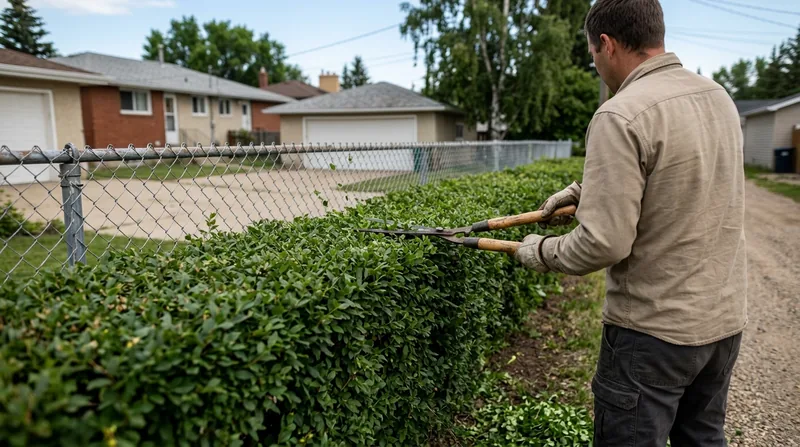




Hedge trimming in Edmonton keeps your property line defined, your sight lines clear and your landscape looking intentional. Most residential hedges across the Edmonton area are caragana, cotoneaster, lilac or dwarf spruce, not cedar, and they need regular attention to stay dense and attractive. River Valley Tree Trimming has trimmed thousands of hedges since 2011, working on one or both faces, levelling the top and bringing back hedges that have run wild for several seasons. We are ISA Certified Arborists and fully insured, and we handle the cleanup so you don't have to. Call us at (587) 400-1412 for a free estimate.
Why hedge trimming matters in the Edmonton area
An overgrown hedge becomes thin and woody at the base, loses its shape and creates a visual mess. Left untrimmed for two or three seasons, it becomes nearly impossible to restore. Regular trimming encourages new growth, fills in gaps and maintains the dense appearance that makes a hedge actually work as a screen or boundary. In Edmonton neighbourhoods with tight lot lines and mature plantings, a well-maintained hedge adds real property value and privacy.
- We trim one or both faces depending on your hedge's location and your sight line needs.
- We level the top to create a clean, professional finish and encourage even growth.
- We remove all clippings and debris, leaving your property ready to use immediately.
- We assess hedge health and flag any branches that are dead, diseased or crossing awkwardly.
- We respect property lines and work safely around fences, gates and neighbouring plantings.
A well-trimmed hedge is also safer. Dead or crossing branches can catch on clothing, create hiding spots or drop onto walkways during wind or ice load. Our crews identify and remove those hazards as part of the standard job.
Local example: A 25-metre caragana hedge on both sides in Glenora, left untrimmed for three years, typically costs $425 to $550 to restore and trim level. A single-face trim on a 15-metre cotoneaster hedge runs $225 to $325. Pricing depends on hedge height, density, species and access.
How we trim your hedge
Our process is straightforward and safe. We arrive with hand shears, power hedge trimmers and a small chipper or truck for debris removal, depending on the volume. We start by assessing the hedge from both sides, identifying dead wood, crossing branches and the overall shape. Then we trim methodically, working from top to bottom and stepping back frequently to keep lines level and even.
- We inspect the hedge for dead, diseased or damaged branches before we begin cutting.
- We trim the top first, creating a level or slightly rounded crown that sheds water and snow.
- We work down both sides, removing crossing and inward-facing branches to open the interior.
- We chip or haul all clippings on the same day, leaving no mess for you to manage.
- We water the hedge if conditions are dry, especially after a heavy trim that exposes new foliage to sun.
The entire job usually takes two to four hours, depending on hedge length, height and how overgrown it is. We work at a steady pace and communicate clearly if we find dead wood or recommend follow-up work. If you want to discuss general tree trimming alongside hedge work, we can often combine the site visit and save you time.
Real scenario: A homeowner in Westmount with a 30-metre lilac hedge, both sides, dense and overgrown. Our crew arrived at 8 a.m., trimmed and shaped the hedge, and finished by noon with all debris chipped and removed. Cost was $565. The hedge now looks intentional and will stay tight for two years with annual spring touch-ups.
Hedge trimming methods and tools
| Method | Description | Best for |
|---|---|---|
| Hand shears | Precision cutting with bypass or anvil shears, one branch at a time. | Detailed work, fine shaping, tight spaces near fences or gates. |
| Power hedge trimmer | Gasoline or battery-powered, two-sided blade, cuts multiple twigs per stroke. | Large hedges, even surfaces, speed and consistency on caragana or lilac. |
| Chipping and removal | Wood chipper on-site or truck haul for large volumes of clippings. | Overgrown hedges, multi-year neglect, properties without yard waste storage. |
| Restoration trim | Combination of methods to remove dead wood, open interior, restore shape over one or two seasons. | Hedges left untrimmed for 3+ years, thin at base, woody interior. |
Timing and seasonal considerations
Hedge trimming works year-round in Edmonton, but the best time depends on the species and your goals. Caragana, lilac and cotoneaster respond well to trimming in late spring through early autumn, when they are actively growing and will fill in quickly. Dwarf spruce and other conifers tolerate trimming in spring or late summer. Avoid heavy trimming in deep winter or during drought, as the hedge will struggle to recover.
- Spring trimming (May to June) encourages dense new growth and is ideal for hedges that have thinned over winter.
- Summer touch-ups (July to August) maintain shape and keep hedges neat without stressing the plant.
- Early autumn trimming (September) hardens off new growth before frost but avoids stimulating tender new shoots.
- Winter trimming is possible but less effective, as hedges are dormant and won't fill in until spring.
- We avoid trimming during extreme heat or drought, when the hedge cannot recover water loss quickly.
Most Edmonton homeowners schedule hedge trimming annually in late spring or early summer, then a light touch-up in August if needed. If your hedge is overgrown, we may recommend a heavy trim in late spring followed by a second pass in mid-summer to restore shape gradually.
What you need to know about permits and cleanup
Hedge trimming on your own property does not typically require a municipal permit in Edmonton or the surrounding municipalities. However, if your hedge is very large, borders a ravine lot or sits near a utility easement, it is wise to confirm with your municipality beforehand. We handle all cleanup as part of our service, chipping material on-site or hauling it away in our truck, so your property is left clean and ready to use.
If you have questions about property line placement, easements or neighbour agreements, we recommend a brief conversation before we start. We work respectfully around shared boundaries and can trim one face only if the hedge sits on the property line and the neighbour has not requested work on their side. For larger projects or if you need documentation for insurance or municipal purposes, consider an arborist report and risk assessment, which our ISA Certified Arborists can provide.
All debris is either chipped and composted or hauled away. We do not leave piles on your property, and we sweep or rake the area once trimming is complete. If you have a specific request for clippings (composting, mulch or removal), let us know when you call for your estimate.
Common hedge species in Edmonton neighbourhoods
Most residential hedges across Edmonton are caragana, cotoneaster, lilac or dwarf spruce. Each responds differently to trimming and has different growth habits. Caragana is tough, fast-growing and forgives hard trimming. Cotoneaster is dense and ornamental but slower to recover from neglect. Lilac is deciduous, flowers in spring and benefits from post-bloom trimming. Dwarf spruce is slow-growing but holds shape well and looks formal. Knowing your hedge species helps us trim it correctly and advise on timing.
- Caragana hedges are extremely common in Edmonton and tolerate aggressive trimming and drought.
- Cotoneaster hedges are prized for their fine foliage and berries but need regular trimming to stay dense.
- Lilac hedges are deciduous and flower in spring, so we trim after bloom to avoid cutting next year's buds.
- Dwarf spruce hedges are slow-growing, formal and benefit from light annual trimming rather than heavy cuts.
- We identify your hedge species on arrival and adjust our approach to its growth habit and recovery rate.
If you are unsure what your hedge is, send us a photo or describe it when you call (587) 400-1412, and we will confirm the species during the free estimate. This helps us give you an accurate price and timeline.
Getting your free estimate
Contact River Valley Tree Trimming for a free, no-obligation estimate. Call us at (587) 400-1412 or visit our contact page to request a visit. We will assess your hedge, discuss your goals (shape, height, density), walk you through the process and give you a firm price on the spot. We serve Edmonton and all surrounding municipalities, including St. Albert, Strathcona County, Fort Saskatchewan, Leduc, Spruce Grove, Stony Plain, Devon, Morinville and beyond. See our full service area map to confirm we cover your location.
We are available for trimming year-round and can often schedule work within a week of your call. If you need urgent work or have questions about tree removal or other services, we handle those too. Let us know your timeline and preferences when you call, and we will find a date that works.
Prices Hedge Trimming in Edmonton — Indicative pricing
| Service | Price | Details |
|---|---|---|
| Single-face hedge trim (up to 15 metres) | From $225 | One side only, levelled top, clippings removed |
| Double-face hedge trim (up to 15 metres) | From $325 | Both sides, levelled top, full clean-up included |
| Extended hedge (15 to 30 metres) | From $425 | Single or double face, pricing varies by species and density |
| Overgrown restoration (3+ years neglect) | From $550 | Heavy trim with dead wood removal, may require follow-up in 6 weeks |
| Free estimate | No charge | Same-day pricing, firm quote, (587) 400-1412 |
Indicative prices; free, personalized estimate within 24h at (587) 400-1412.