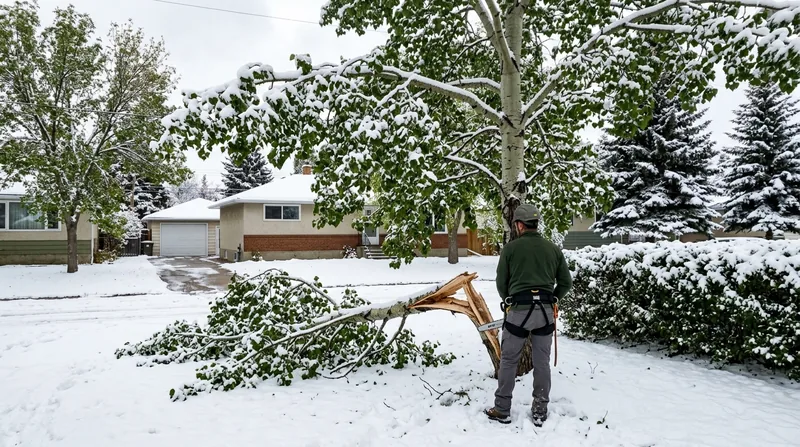




Heavy Snow & Cold Damage Cleanup in Edmonton is an urgent response to winter's two most destructive forces: wet spring snow falling on trees that have already leafed out, and deep cold snaps that split bark on young trunks. Edmonton's parkland climate makes this damage predictable and serious. When branches break under wet snow load or frost cracks expose heartwood, the tree's structural integrity is compromised and decay will follow. We clear the breaks, assess what the winter actually did, and advise whether the tree can recover or must be removed. Our ISA Certified Arborists have been managing storm damage across the Edmonton area since 2011. Call us at (587) 400-1412 for a free estimate, or read more about our 24/7 emergency tree removal service.
Why winter damage cleanup cannot wait
A broken limb or frost crack is not cosmetic. Exposed wood invites disease, insects, and fungal infection. In Edmonton's black soil and variable spring weather, a tree weakened by winter stress will decline visibly over the next two growing seasons. Removing dead or hanging branches immediately prevents further splitting, reduces the load on the remaining structure, and gives the tree the best chance to compartmentalize the wound. Bark cracks that expose cambium will not heal; they must be left open to dry naturally, never sealed. Leaving damage unaddressed puts your property, vehicles, and anyone beneath the canopy at risk.
- Remove hanging or split branches before they fall unpredictably.
- Assess bark cracks and exposed wood for structural viability.
- Thin the crown to reduce wind loading and prevent future damage.
- Clear debris and chip wood on site to streamline cleanup.
- Document damage for insurance purposes if needed.
Each of these steps protects the tree and your property. We handle the assessment and removal so you do not have to climb into damaged limbs or guess whether the tree will survive.
Local example: A mature green ash on a residential lot in Glenora sustained three major branch breaks after a wet April snowfall. Our crew removed 2 tonnes of broken wood, thinned the canopy by 20 per cent, and left the tree standing. Without cleanup, that tree would have declined into a hazard within two seasons. With proper assessment, it recovered and is still productive today.
How we assess and clear winter damage
Our process begins with a thorough inspection. We identify which breaks are structural (affecting the main scaffold limbs) and which are secondary. We look for frost cracks in the bark, particularly on young trunks of spruce, aspen, and birch that are common in Edmonton neighbourhoods. We assess whether the tree can be saved or should be removed. Then we work methodically from the top down, removing broken wood safely and leaving clean cuts that allow the tree to compartmentalize the wound naturally.
- Climb and inspect all broken or damaged limbs for extent and safety risk.
- Document bark cracks and frost splits with photographs for your records.
- Remove dead wood and branches with poor attachment angles.
- Make proper pruning cuts at the branch collar, never flush to the trunk.
- Chip debris on site and haul away any material you do not want.
- Leave the tree standing if recovery is viable, or remove it if damage is too severe.
The goal is to restore the tree's balance and reduce the stress that winter imposed. A properly pruned tree will compartmentalize wounds and redirect growth to healthy limbs.
Field example: A trembling aspen in Westmount suffered a major branch failure after a March windstorm. The break exposed the heartwood and created a cavity risk. We removed the broken limb, thinned the crown to match the new structure, and monitored the tree over two seasons. It compartmentalized the wound and remains a healthy landscape feature.
Methods and tools for damage removal
| Method | Description | When used |
|---|---|---|
| Rope and saddle removal | Arborist climbs using secure rigging to lower broken limbs piece by piece. | Large branches over structures or property. |
| Bucket truck access | Elevated work platform reaches high damage safely without climbing. | Suburban lots with clear access and stable ground. |
| Chipper and debris removal | Wood chips on site; larger pieces hauled away in our truck. | All jobs; saves you disposal cost and effort. |
| Bark assessment and documentation | Photographs and notes record frost cracks and splits for insurance claims. | When damage may be covered and you need proof for your insurer. |
We carry full liability insurance and respect all safety distances near private electrical service entrances. If a tree is touching the public distribution network of your local utility or AltaLink, we refer that hazard to the utility and do not work on it. For all other damage, we have the equipment and expertise to work safely in tight Edmonton lots, river-valley properties, and rear-lane access situations.
Timing and seasonal readiness in Edmonton
Winter damage becomes visible in late March and April when snow melts and broken limbs sag under their own weight. However, emergency removal can happen anytime a tree is hazardous. If a large branch is hanging or the tree is leaning towards a building, do not wait for spring. Call us immediately. For non-urgent damage, late fall and winter (after leaf drop and before April) are ideal for structural pruning because the tree is dormant and the damage is easiest to assess. Spring damage cleanup should start as soon as temperatures allow our crews to work safely on the ground.
We respond 24/7 to genuine emergencies. If a tree or major limb has fallen across a driveway, roof, or power line, call (587) 400-1412 right away. For planned cleanup of winter damage that is not immediately hazardous, we schedule work during normal business hours and aim to visit within 3 to 5 business days of your call. Learn more about our tree pruning and crown reduction service for preventive work that reduces future storm damage.
What happens after cleanup
Once broken wood is removed and the tree is assessed, the next step depends on the damage extent. If the tree is viable, we may recommend crown thinning to reduce wind loading and improve structure. If damage is severe (more than 50 per cent of the canopy lost, or major trunk cracks), the tree may need to be removed entirely. We will advise you clearly and offer a separate estimate for removal or follow-up pruning if needed. We also offer arborist reports and risk assessment if you want a detailed written record of the tree's condition for insurance or future planning.
For trees that survive winter damage, monitor them over the next two growing seasons. Watch for signs of decline, such as sparse leafing, canker growth, or pest infestation. Many trees recover fully and live for decades after storm damage. Others decline gradually and may need removal within a few years. We are here to advise and help you manage that transition.
If you have questions about cost, timing, or whether your tree can be saved, contact us for a free estimate. We serve Edmonton and the surrounding municipalities, and we document all damage for your insurance claim if needed.
Prices Heavy Snow & Cold Damage Cleanup in Edmonton — Indicative pricing
| Service | Price | Details |
|---|---|---|
| Branch removal and cleanup (small to medium) | From $375 | Up to 3 broken branches, debris chipped and cleared on site |
| Branch removal and cleanup (large or multiple trees) | From $650 | Major breaks, multiple trees, or complex access situations |
| Arborist assessment and damage report | From $225 | Professional evaluation of winter damage and viability, photographs for insurance |
| Full tree removal after winter damage | From $450 | Complete removal, stump grinding available separately, debris chipped and hauled |
| Travel and site visit | Included | No charge for estimates in Edmonton and the surrounding area |
| Free estimate | Free | Call (587) 400-1412 or submit a request online for a response within 24 hours |
Indicative prices; free, personalized estimate within 24h at (587) 400-1412.